Welcome to the Pepper Ridge North Valley's
Severe Weather Page
This is your weather warning resource page. Check this page for the latest watches and warning updates,
from The National Weather Service, Phoenix, Az.!
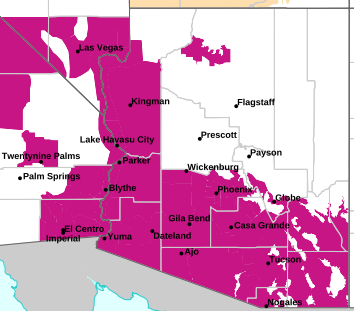
MAP OF CURRENT SOUTHWEST WATCHES, WARNINGS AND ADVISORIES
Local & Regional Weather Statements, Watches And Warnings
Weather Alerts for Yuma/Martinez Lake & Vicinity/Lower Colorado River ValleyIssued by the National Weather Service |
| No severe weather expected for Yuma/Martinez Lake & Vicinity/Lower Colorado River Valley |
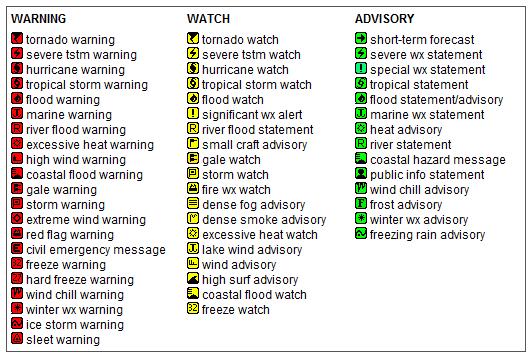
Key to Icons for Local & Regional Weather Statements, Watches And Warnings
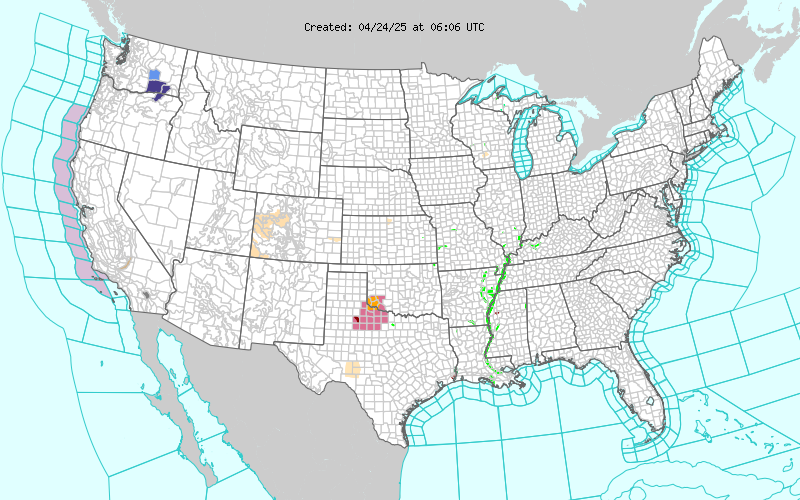
Map of the Current Watches, Warnings, and Advisories Nationwide:
|
|
Member of the:


|
North Valley Random Weather Facts |
MOON PHASE Misconception...
"The most common incorrect reason given for the cause of the Moon's phases is that we are seeing the shadow of the Earth on the Moon! But this cannot be correct: when the Moon passes through the shadow of the Earth, we get a lunar eclipse. Anyone who has seen a lunar eclipse, though, might remember that the Moon actually passes through the Earth's shadow only rarely, so that can't be why the Moon has phases. The real reason for the Moon's phases depends on two things: the Moon is round, and the angle it makes with the Earth and Sun changes over its orbit."
- As Quoted From Bad Astronomy.
Get the Facts PHP
|
|
Page layout last updated on Mar 8th, 2024
|
|
|



 New Feature